
Cleaning has become a bigger priority as lines run faster and tolerances tighten. A single dusty case of bottles can clog a filler nozzle, throw off a checkweigher, or leave a label that won't stick. This article covers interior cleaners, exterior cleaners, integrated systems, and the practical factors that go into choosing equipment for a real production environment.
Key Takeaways
- Container cleaning equipment prepares bottles for filling, labeling, inspection, and packing
- Interior and exterior cleaning solve different contamination problems and often need separate equipment
- Container design, residue type, line speed, and utilities all shape which system fits
- Match equipment to applicable food, beverage, pharmaceutical, or wastewater requirements before you specify anything
What Is Container Cleaning Equipment and Why Does It Matter?
What is container cleaning equipment?
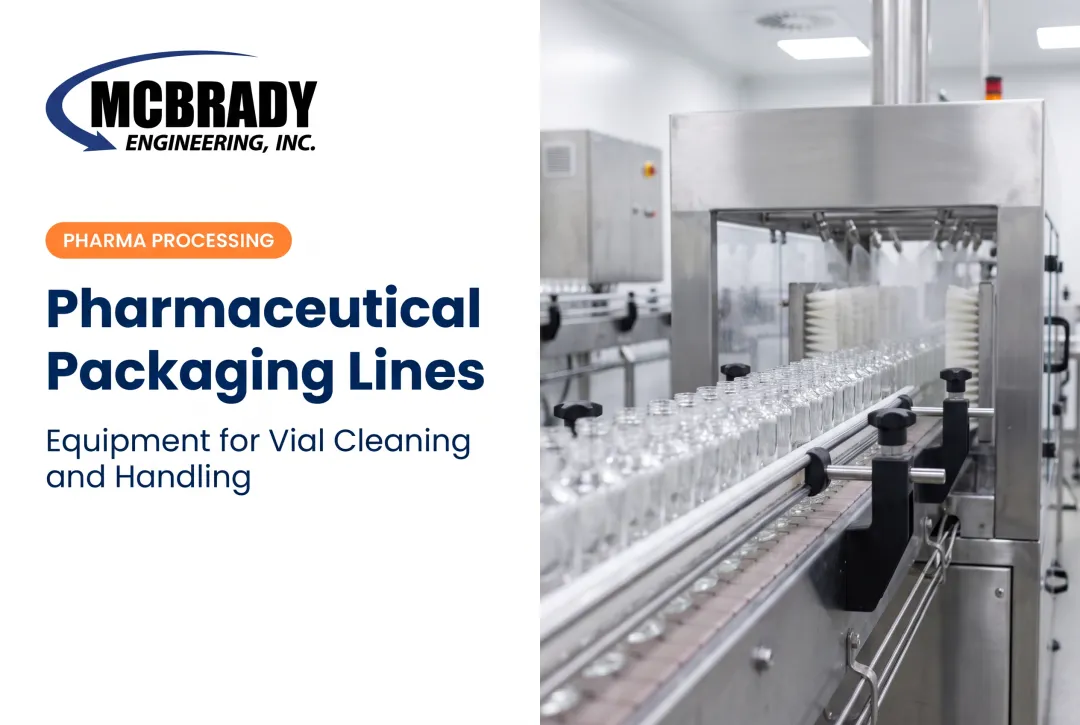
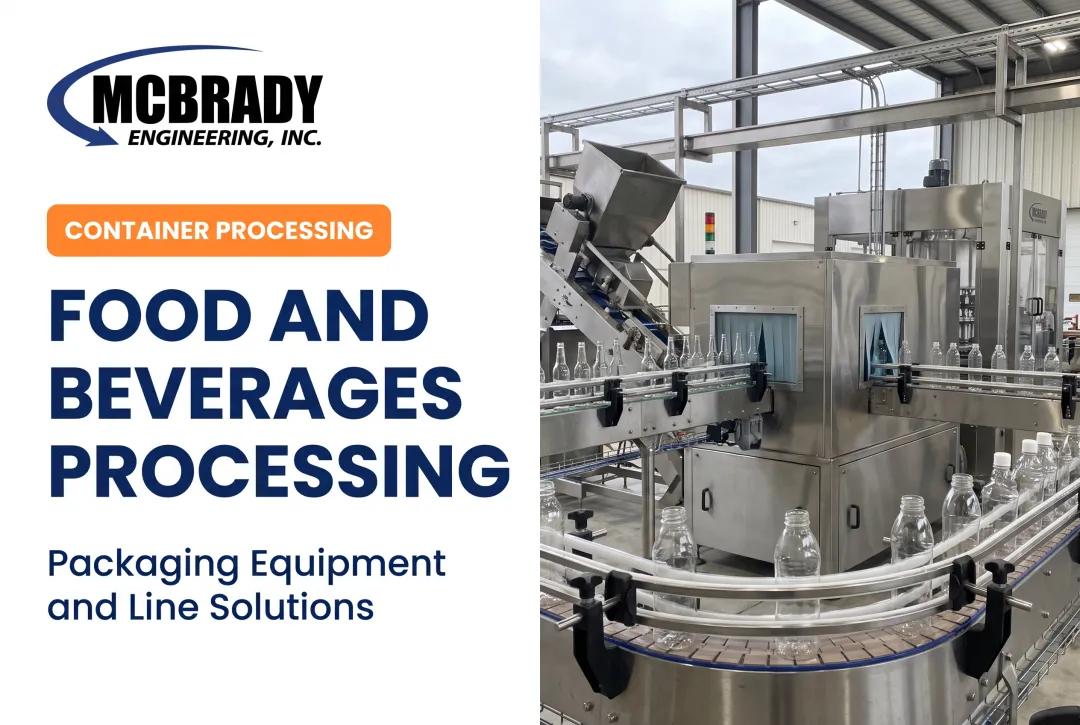
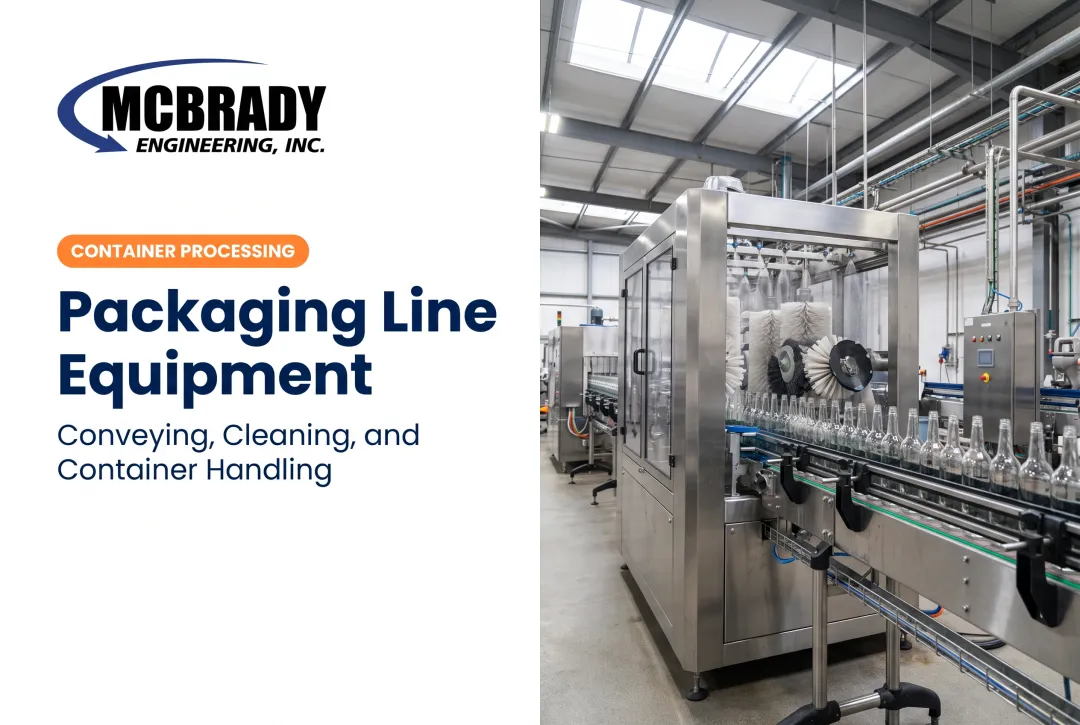
Container cleaning equipment is machinery that cleans, rinses, blows, washes, or dries empty containers within or alongside a packaging line. Some systems only clean the inside of a bottle. Others handle only the exterior. Many lines use both, often at different stages.
PMMI's ProSource directory lists air rinsers built specifically for empty plastic bottles on bottling and jar-filling lines. Equipment makers describe these prefill rinsers as removing dust and debris picked up during bottle manufacturing, shipping, or storage. That's the core job: get the container ready before product goes in.
Where is it used on a packaging line?
Placement depends on the line layout, but cleaning equipment typically sits:
- After depalletizing or unscrambling, once bottles are upright and single-file
- Before the filler, so contaminants don't end up in the product
- Sometimes after filling, when exterior spills or drips need removal before labeling
You'll find this equipment across:
- Beverage bottling
- Food packaging
- Pharmaceutical and nutraceutical filling
- Chemical and household-product packaging
- Contract-packaging operations
The specific machine rarely suits every industry equally. A gripper-style cleaner built for high-speed water bottling isn't the same unit a small winery needs for gas-purging new bottles before filling.
Why does container cleaning matter?
Inconsistent cleaning shows up downstream, usually at the worst possible moment. Dust and glass particles that make it past the cleaning stage can contaminate product, clog filling nozzles, or trigger rejects at inspection. Residue on the exterior can keep labels from adhering properly.
For bottled drinking water, federal rules require multiservice containers to be cleaned and inspected immediately before filling. Any container found unsanitary or defective must be reprocessed or discarded under 21 CFR 129.80. That's a regulatory floor, not a benchmark for reject rates on a given line, but it shows why cleaning sits so close to the filler in most layouts.
Cleaning versus sanitizing or sterilizing
These terms get used loosely, and that's a problem. Under 21 CFR 117.3, sanitizing means treating already-cleaned surfaces with a process that destroys specified pathogens and substantially reduces other microorganisms, without harming the product or creating a hazard. Cleaning and sanitizing are two separate actions.
A standard bottle cleaner that removes dust with air or rinses with water is performing cleaning, not sanitizing or sterilizing. Don't assume otherwise unless the specific equipment and process have been validated for that purpose.
For drug containers, 21 CFR 211.94 requires cleanliness, with sterilization required only where the drug itself calls for it. Confirm which outcome your process actually needs before specifying equipment.

Types of Container Cleaning Equipment and Systems
Container-cleaning systems aren't one-size-fits-all. The right equipment depends on the cleaning objective, container geometry, contamination type, production rate, and how the line is configured.
Interior container cleaners
These machines target the inside of empty bottles, jars, or vials. Most use some combination of air, liquid, steam, gas, vacuum, or brushes to dislodge and remove what's inside, verified against the specific contaminant and container.
Interior cleaning matters most when containers arrive with dust, glass particles, packaging debris, or manufacturing residue before filling.
McBrady Engineering's ORBIT Bottle Cleaner, for example, uses direct tube injection of air, liquid, steam, or gas, and it can gas-purge or flush new wine bottles before filling. Its gripper-style HS-600 cleans empty bottle interiors with air, water, sanitizer, or any combination, running up to 540 bottles per minute for a standard 8-ounce bottle, with no change parts needed for new bottle sizes.
Best-fit applications:
- Beverage bottling
- Food packaging
- Pharmaceutical and nutraceutical filling
Trade-offs to weigh:
- Neck finish and opening size limit which nozzles or tubes fit
- Container orientation affects whether liquid drains properly
- Wet methods add a drying step and utility draw that air-only methods avoid
Exterior container cleaners
Exterior systems clean the outside of containers, removing product spills, dust, adhesive residue, or grime that could interfere with labeling, handling, or how the finished product looks on a shelf.
McBrady's Model #42 Exterior Rinse Tunnel mounts around an existing conveyor, stays completely enclosed so contaminants don't escape into the surrounding area, and comes in lengths including 6, 8, and 10 feet.
The Model #22 Bottle Duster uses ionized compressed air, brushing, spinning, and vacuuming to strip dust, powder, and debris, reaching speeds up to 400 containers per minute depending on container shape.

Exterior cleaning supports downstream labeling, inspection, and safe handling, but it doesn't replace interior cleaning when the contamination concern is inside the bottle.
Best suited for:
- Sticky products and filled-container cleanup
- Pharmaceutical or lab packaging where label adhesion matters
Watch for water management, drying time, and the risk of recontamination after the container leaves the cleaner.
Integrated, customized, or complete cleaning systems
A complete system can combine interior cleaning, exterior cleaning, conveying, orientation, rinsing, drying, and controls into one coordinated setup. This approach fits situations like unusual bottle shapes, multiple container sizes on one line, tight floor space, frequent changeovers, or aggressive residues that standard equipment can't handle.
| Need | Standalone equipment | Integrated system |
|---|---|---|
| Single container, single contaminant type | Often sufficient | Overkill |
| Multiple SKUs, frequent changeovers | Limited flexibility | Better fit |
| Tight floor space | May not integrate cleanly | Designed to the footprint |
| Unusual bottle geometry | May need rework | Built to match |
McBrady Engineering offers compact interior and exterior bottle-cleaning machinery alongside custom engineering and fabrication for prototypes and one-off solutions, built in stainless and mild steel at its Joliet, Illinois facility. Verify any machine-specific capability against your actual containers before committing.
The trade-off with integrated systems is real: better line fit and flexibility, but higher design complexity, more commissioning time, and more upfront capital.
How to Choose the Right Container Cleaning System
The right system matches equipment to your operation's actual cleaning objective and constraints. Spec-sheet speed and feature count matter less than fit with your containers, line layout, and quality standards.
Container and contamination requirements
Document the container first:
- Material, dimensions, and neck or opening design
- Orientation and fragility on the line
Then identify exactly what you're removing: dust, glass particles, product residue, oils, adhesive, or moisture. A method built for dry dust won't touch sticky adhesive residue, and vice versa.
Production rate and line configuration
Assess current and planned throughput, available footprint, and where the cleaner sits relative to the filler, capper, labeler, and inspection equipment. Ask suppliers how the system performs during startup, stoppages, and changeovers, not just at its nominal rated speed. A machine rated for 400 containers per minute under ideal conditions may run differently with your actual bottle shape.
Cleaning method, utilities, and facility conditions
Compare dry air, vacuum, water-based rinsing, detergents, and brushes against their downstream effects:
- Drying needs differ sharply between air-only and wet methods
- Wastewater handling matters for any water-based rinse
- Compressed air supply needs to match the machine's actual draw, not a rounded estimate
- Noise and operator safety vary by method and enclosure design
Confirm available compressed air, water quality and pressure, drainage, and electrical service before finalizing any design.
Flexibility, changeovers, and quality control
Check how quickly the system handles different container sizes and shapes, including tooling, guides, and sensor adjustments. McBrady's HS-600, for instance, requires no change parts for new bottle sizes, while its Bottle Dusters offer tool-less changeovers across four models.
Define how you'll check and document cleaning performance, whether that's visual inspection, particle checks, or customer-specific criteria. Validate the approach with your quality team rather than assuming the equipment vendor's claims cover your specific standard.
Total cost of ownership and support
Purchase price is only part of the cost. Factor in:
- Installation and commissioning
- Utilities and consumables
- Spare parts and preventive maintenance
- Expected service life
Ask about documentation and the supplier's ability to modify equipment for specialized applications.
When a standard configuration doesn't match your line, McBrady Engineering's 60-plus years of bottle-cleaning experience and custom engineering are worth evaluating. Confirm fit against your containers and process rather than relying on tenure alone.

What to Check Before Finalising a Container Cleaning System
What to Check Before Finalizing a Container Cleaning System
A few final checks catch problems before they become expensive:
- Confirm the cleaning method, container handling, and integration design match your production process rather than choosing on top-line speed alone
- Factor water, compressed air, energy, wastewater, drying, noise, corrosion resistance, and maintenance access into total cost and uptime
- Review changeover time, format range, tooling costs, and material switches before locking in one configuration for every future SKU
- Align the system with food, beverage, or pharmaceutical regulations, customer specifications, and site safety requirements, including OSHA rules for wet floors and machine guarding
Conclusion
Container cleaning equipment keeps packaging lines running the way they're supposed to: containers go in dirty or dusty, and come out ready for filling, labeling, inspection, and final handling. Interior cleaners, exterior cleaners, and integrated or custom systems each solve a different piece of that problem.
Selection comes down to contamination type, container design, line speed, available utilities, changeover needs, and total ownership cost, not just which machine has the highest number on its spec sheet.
Before requesting an equipment recommendation or a custom engineering review, document your containers, the contaminants you're removing, your line conditions, and your cleaning expectations. That groundwork makes the conversation with any equipment supplier a lot shorter.
Frequently Asked Questions
What is a container cleaning system?
A container cleaning system cleans, rinses, blows, washes, or dries containers on a packaging line, usually before filling and sometimes after. The method depends on container type and the contaminants you need to remove.
Why are containers cleaned before filling?
Dust, glass particles, and manufacturing residue can contaminate product, clog fillers, or cause rejects if they aren't removed first. Food, beverage, and pharma lines each set different particle and residue limits that drive method choice.
What is the difference between interior and exterior bottle cleaning?
Interior cleaning removes contaminants from inside an empty container, directly affecting what the product touches. Exterior cleaning addresses the outside surface, supporting labeling, handling, and inspection.
How do I choose a bottle cleaner for a packaging line?
Match container design, contaminant type, and line speed to a cleaning method that fits your utilities and changeover needs. Validate performance with your quality team and compare total cost of ownership, not just purchase price.
Can container cleaning equipment handle different bottle sizes and shapes?
Capability depends on the machine's design, tooling, and guides. Some systems, like gripper-style cleaners, need no change parts for new sizes; others require tooling swaps, so confirm the range with the manufacturer.
What should be considered when integrating a container cleaner into an existing line?
Conveyor layout, line speed, container orientation, utilities, drainage, and guarding all affect integration. Plan for commissioning time and operator training alongside the equipment purchase itself.