
Common culprits include:
- Unusual container formats or materials
- Tight floor space that rules out catalog equipment
- Demanding washdown or sanitation conditions
- Frequent changeovers across multiple SKUs
- Integration with an existing, often older, line
- A need to prototype or test one-off equipment before committing to a full build
This article covers what custom fabrication design actually involves: which specifications matter, how the process typically runs, and what to look for when choosing a fabrication partner for packaging or container-handling equipment.
Key Takeaways
- Custom fabrication turns a specific line need into a buildable solution, not a catalog compromise.
- Lock containers, throughput, materials, sanitation, utilities, footprint, and integration before build.
- Early user–designer–fabricator collaboration catches manufacturability issues before costly rework.
- Engineering covers prototypes, one-offs, and specialized cleaning for food, beverage, pharma, and chemical lines.
Why Custom Fabrication Is Valuable for Industrial Equipment and Packaging Systems
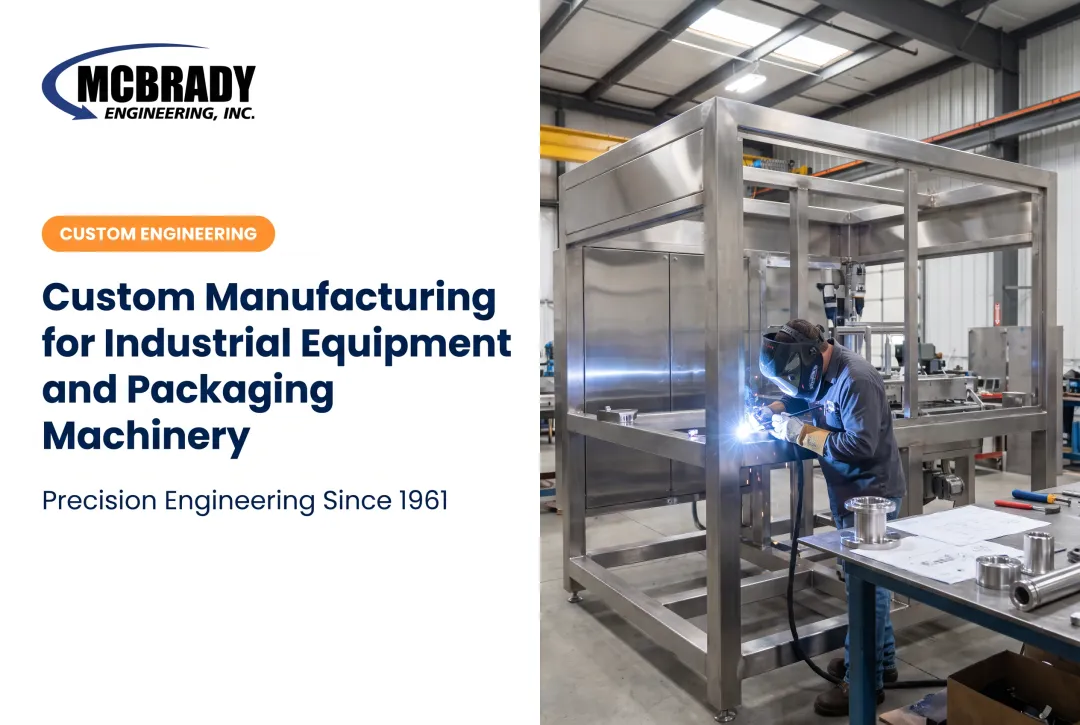
Custom fabrication design means engineering and building equipment around a specific operational requirement, rather than selecting a standardized product and hoping it fits. That doesn't always mean starting from a blank sheet, either. Sometimes it means adapting a proven platform, like modifying an existing machine's configuration to handle a new container format or a different packaging arrangement.
When Standard Equipment Falls Short
Off-the-shelf equipment works fine when your containers, throughput, and line layout fall within normal ranges. It stops working when:
- Container dimensions or materials fall outside standard tooling ranges
- Floor space doesn't match a catalog machine's footprint
- Washdown, chemical exposure, or hygienic requirements exceed standard construction
- The line needs to interface with legacy equipment that wasn't designed for modern modules
The business case for customization centers on operational fit. That fit shows up as:
- Improved use of floor space
- Equipment matched to your actual materials and process conditions
- Easier integration with equipment already on the line
- A clearer path for future modifications
The Case for Prototyping First
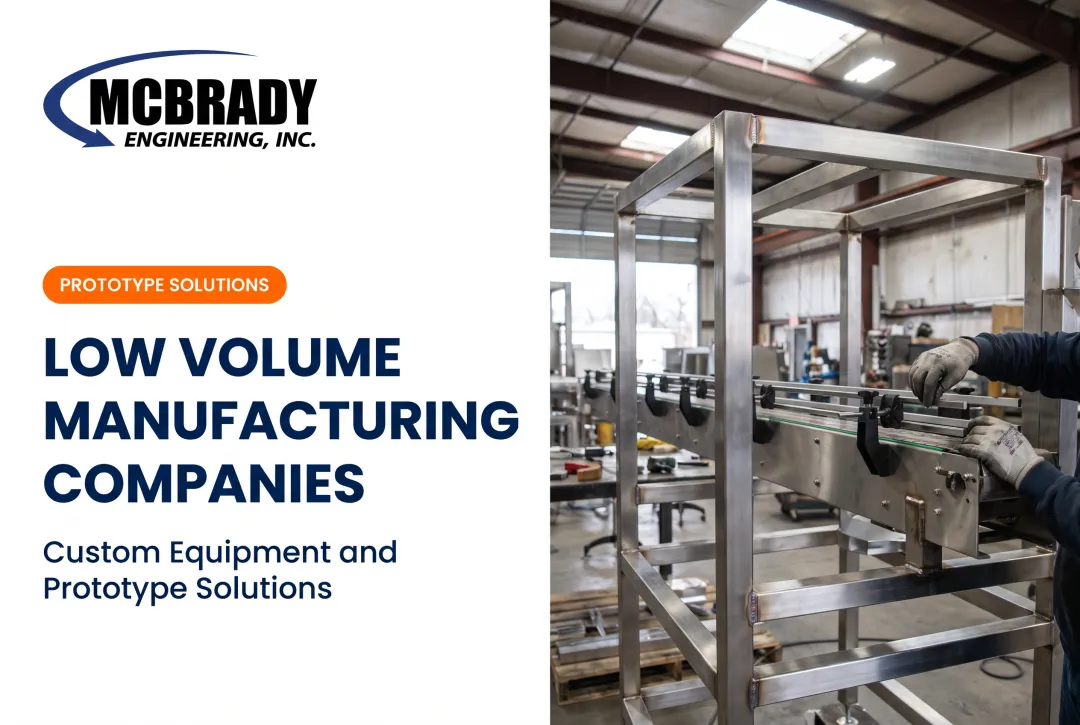
Before committing to a full custom machine, a prototype can validate the concept. In practice, that means testing working parts with the actual container before those elements go into a complete design. Confirming the approach handles your specific format early reduces risk before you invest in a full production system (prototyping guidance from Morrison).
A one-off solution follows similar logic. It solves one specialized production problem, like cleaning an unusual vial shape or handling a niche container, without the overhead of designing a system meant for broad applicability.
Design Requirements for Industrial Equipment and Packaging Systems
Good design starts with documentation before drawings. Skipping this step is the most common reason projects stall mid-fabrication.
Document the Application First
Before any design work begins, define:
- The product being packaged and its physical characteristics
- Container material, dimensions, and acceptable variation
- Expected throughput, in units per minute or hour
- Line configuration and whether multiple SKUs must run on the same equipment
Environmental and Hygienic Requirements
Washdown exposure, moisture, dust, and chemical residues all shape material and design choices. Key considerations include:
- Drainage and cleanability of all surfaces
- Access to product-contact or near-product zones
- Elimination of recesses that are difficult to clean
- Temperature extremes during operation or cleaning cycles
Hygienic equipment design standards, such as those outlined in the 3-A Sanitary Standards primer, generally call for smooth surfaces, proper drainage, and accessible cleaning and inspection points. These criteria apply where the relevant standard is in scope, not as a blanket requirement for every packaging component.
Matching Materials to the Environment
Material selection should match the operating environment, not just budget. Factors to weigh:
- Corrosion resistance against product residues and cleaning chemicals
- Mechanical strength and wear resistance for the duty cycle
- Weight constraints tied to mounting or structural limits
- Cleanability and long-term lifecycle costs
Stainless steel is common in food, beverage, and pharmaceutical applications. McBrady Engineering's fabrication work, for example, uses 304 and 316L stainless steel along with mild steel. Passivation is performed on every weld, and pharmaceutical-grade welding is available when the application calls for it. The right grade depends on the specific chemical exposure and should be verified for the application rather than assumed from a general use case.
Mechanical and Integration Considerations
A machine that works in isolation can still fail on the floor if it doesn't fit the line. Address:
- Available footprint and existing conveyor height
- Infeed and discharge orientation relative to upstream/downstream equipment
- Guarding, operator access, and maintenance clearances
- Utility requirements (power, air, water, drains)
- Controls interface compatibility with the existing line
Design for Manufacturability
A design that looks right on screen can still be hard to build. Good design-for-manufacturability practice includes:
- Accessible welds and joints for inspection and repair
- Realistic tolerances rather than unnecessarily tight specs
- Replaceable wear components instead of integrated parts
- Standard hardware where it doesn't compromise function
RFQ Checklist
When requesting a quote, include:
- Drawings or sketches of the container and desired layout
- Performance objectives, including target throughput
- Site constraints, such as footprint and ceiling height
- Utility availability (power, air, water, drainage)
- Material preferences and finish requirements
- Acceptance criteria and installation expectations
- Requested documentation (drawings, BOMs, certifications)
The Custom Fabrication Design and Development Process
Custom equipment projects follow a consistent sequence. Details shift with fabricator capabilities and project scope, but the stages below are common across industrial packaging work.
Discovery and Concept Development
The fabricator reviews the application, identifies constraints, and determines whether the project needs a modification to existing equipment, a new component, a prototype, or a complete custom machine. This stage sets the trajectory for everything that follows.
From Concept to Engineered Design
Concepts become engineered designs through sketches, 3D CAD models, and dimensional layouts.
McBrady Engineering's team, for example, uses 3D modeling, full-scale assembly drawings, finite element analysis, and 2D drawings to turn a concept into a buildable design. Software choice matters less than the deliverables: usable models and accurate fabrication drawings matched to project complexity.
Design Review and Risk Reduction
Before fabrication starts, a design review should check:
- Container movement through the full equipment path
- Access points for operators and maintenance staff
- Changeover steps and time required
- Cleaning routes and dead zones
- Pinch points and guarding placement
- Interfaces with existing packaging equipment
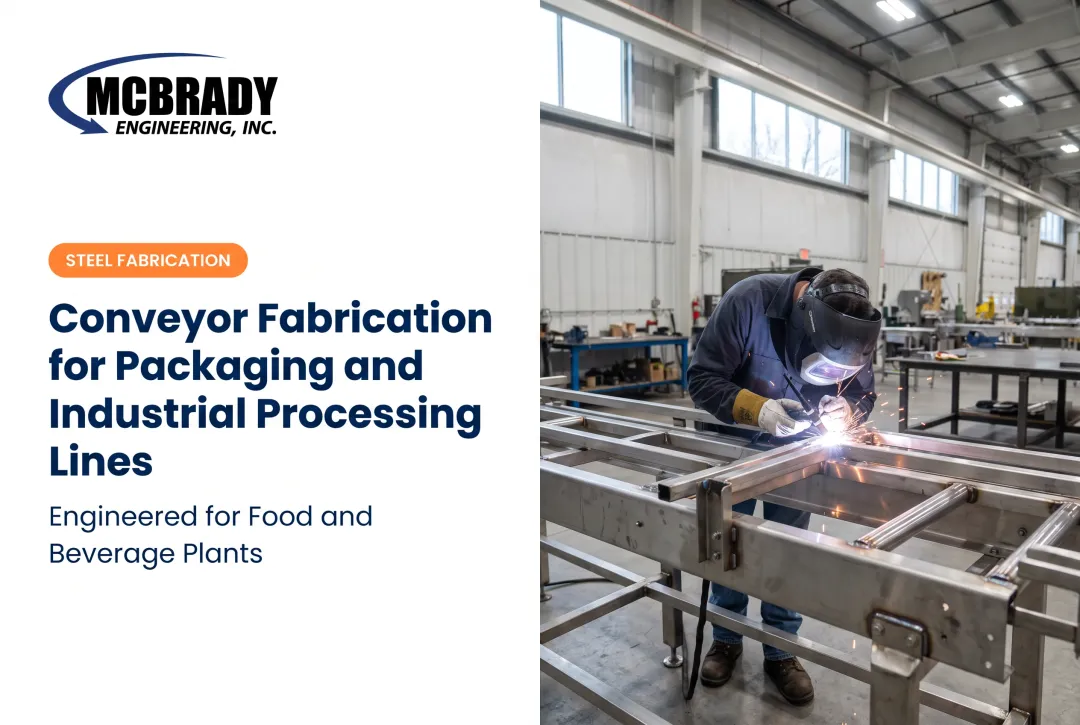
Fabrication and Assembly
At a high level, this stage covers:
- Material preparation
- Forming or machining
- Joining and subassembly
- Fit-up and finishing
- Integration of purchased components
What happens in-house versus through subcontractors depends on the fabricator you select.
Inspection and Functional Verification
Before delivery, equipment typically goes through:
- Dimensional checks against the approved design
- Visual and workmanship review
- Dry runs and, where appropriate, live container testing
- Documentation of any deviations or approved changes
Delivery, Installation, and Feedback
The final stage covers delivery, installation, commissioning, and operator orientation. Lessons from the field—what worked and what needed adjustment—often shape the next equipment iteration.

Applications and Use Cases for Packaging and Container-Cleaning Equipment
Custom fabrication varies by industry and the operational constraint you need to solve.
Beverage Bottling
Beverage lines frequently need equipment that accommodates specific bottle formats at speed. In one documented case, a beverage producer selected handling and packing equipment configured for both round and square bottle formats on the same line, with adjustable components for different bottle widths Packaging World field report. Interior rinsing and dust removal before filling are common requirements in these setups.
High-speed lines are only part of the picture—many producers need the same cleaning functions at a much smaller scale.
Craft Breweries, Distilleries, and Wineries
Craft breweries, distilleries, and wineries don't need a full high-speed system. They need a smaller footprint and a semi-automatic workflow. Purpose-built compact equipment fits these lines better than scaled-down versions of high-speed machines.
Pharmaceutical and Vial Applications
Vial handling often has to cover several constraints at once:
- Format-specific change parts
- Interior rinsing and controlled exterior drying
- Cleanliness expectations across batch changeovers
McBrady Engineering's Model #41 Exterior Vial Washer/Dryer, for example, uses a patterned guide path to expose the full vial exterior while keeping the cap area dry during low-pressure washing and rinsing. Verify compliance claims against the regulatory framework that applies to your application—don't assume a generic claim is enough.
Chemical and Industrial-Fluid Packaging
Chemical and household-product packaging environments bring their own constraints. Aggressive chemicals and washdown conditions can affect:
- Material selection for wetted and exposed components
- Sealing and gasket choices
- Guarding and drainage design
- Finish requirements to resist corrosion
Some operations require construction that avoids reactive metals altogether. McBrady Engineering's Anti-Corrosive Cleaners, built from plastic, fiberglass, and titanium, are designed for environments where standard metals aren't acceptable.
Contract Packagers and OEMs
Contract packagers running multiple SKUs need flexible modules that adapt across jobs without extensive retooling. Packaging OEMs and integrators often specify custom modules as part of a larger line project, where the module needs to meet a customer's exact specification rather than a generic standard.
McBrady Engineering builds prototypes and one-off container-cleaning modules for these projects, alongside its standard interior and exterior bottle-cleaning line.

How to Choose a Custom Fabrication Partner
Not all fabrication shops are equipped for packaging-specific challenges. A few questions separate the right fit from a costly mismatch.
Assess Application Experience, Not Just Capability Claims
Ask whether the partner actually understands:
- Packaging-line interfaces and container handling
- Sanitation and washdown requirements
- Changeover procedures and access needs
- Your specific operating environment
A general fabrication shop may build quality metal parts without understanding why a drainage slope matters or why a particular guard placement creates a cleaning dead zone.
Verify Engineering-to-Fabrication Continuity
A clean handoff between design and build matters. Ask how the company manages:
- Design reviews and drawing revisions
- Material traceability, where required
- Inspection and testing procedures
- Documentation of changes throughout the project
Confirm Manufacturing Capacity Matches Project Scope
Projects range from a single prototype to a complete integrated module. Confirm the partner can handle your project's scale, and ask how they manage subcontracted or purchased components within the build.
Request Specifics Before Committing
Before signing off, ask for:
- Relevant project examples or references
- Clear project assumptions and deliverables
- Schedule milestones
- Warranty or support terms
- A detailed breakdown of what's included in the quote
McBrady Engineering's Capabilities
McBrady Engineering has built bottle-cleaning machinery since 1961, starting with its original Orbit Bottle Cleaner. Today, the company offers custom engineering and fabrication for prototypes and one-off solutions from more than 30,000 square feet of manufacturing space in Joliet, Illinois.
If you have a specialized bottle-cleaning or packaging-equipment requirement, reach out to McBrady Engineering at sales@mcbradyengineering.com or (815) 744-8900 to discuss your application and specifications.
Frequently Asked Questions
What is a custom fabricator?
A custom fabricator designs and builds equipment, components, or assemblies to a customer's specs instead of a fixed catalog product. In industrial and packaging work, that often means container-handling modules or specialized cleaning equipment.
What is design and fabrication?
Design defines how a solution should function and be built—CAD models, drawings, and material selection. Fabrication is the physical build: turning approved plans and materials into a finished component or machine.
What is the best design software for fabrication?
Most industrial shops use tools such as SolidWorks, Autodesk Inventor, or AutoCAD, depending on complexity and drawing needs. The better measure is whether the files support manufacturability and produce clear, build-ready documentation.