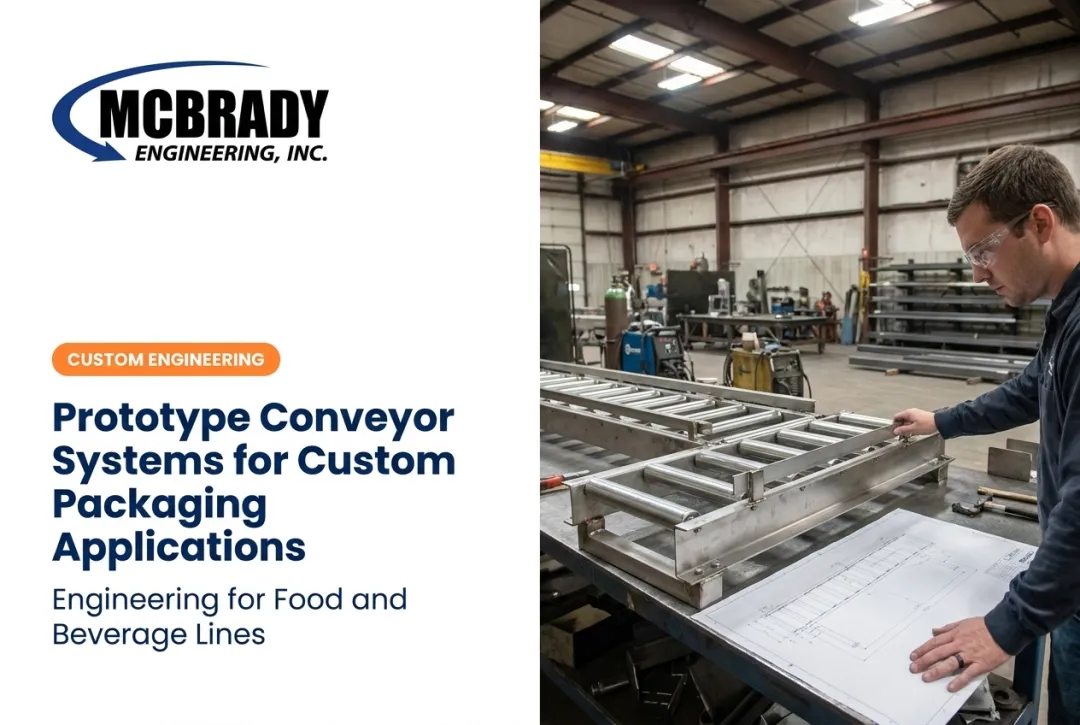

Packaging and processing lines rarely handle one product type at one speed. Containers change shape, line speeds shift between SKUs, sanitation routines vary by shift, and environmental conditions range from dry warehouse floors to constant washdown. A conveyor that does not match these realities creates jams, contamination risk, product damage, painful changeovers, and unplanned downtime.
This guide covers conveyor types, the design decisions that matter most for packaging and industrial lines, what fabrication quality actually looks like, how conveyors integrate into a working line, and how to evaluate a fabrication partner before you sign a purchase order.
Key Takeaways
- Conveyor fabrication shapes how reliably products move, accumulate, position, and transfer between line stations.
- Belt, roller, chain, slat, and modular plastic conveyors each suit different product, sanitation, and throughput needs.
- Custom fabrication pays off when standard equipment can't handle unusual containers, tight footprints, or frequent changeovers.
- Accurate quotes depend on dimensions, weight, line speed, environment, and cleaning requirements upfront.
What Conveyor Fabrication Means for Packaging and Processing Lines
Not every conveyor purchase involves the same level of customization. There are three distinct approaches:
- Standard equipment — a manufacturer's existing catalog model, unmodified.
- Configured equipment — a base design with selected dimensions and options, often generated through a manufacturer's online configurator.
- Custom-fabricated equipment — engineered or modified specifically for your line's geometry, interfaces, and product.
Standard equipment works when your product, footprint, and interfaces match an existing design closely. Custom fabrication becomes necessary when they don't.
The Elements That Actually Get Fabricated
A conveyor isn't one object. It's an assembly of fabricated parts working together:
- Structural frame and supports
- Conveying surface (belt, roller bed, chain, or slat)
- Drive and tensioning components
- Guides, rails, and transfer sections
- Guarding and discharge points
- Access panels for inspection and cleaning
Conveyors Function as Part of a Connected Line
A conveyor rarely stands alone. It moves products between filling, cleaning, inspection, labeling, capping, packing, and palletizing stations. According to MHI's conveyor fundamentals overview, conveyors fall into two broad operating groups — gravity and powered — with belt, roller, chain, and slat as common powered configurations within that structure. Searches for "three types of conveyors" reference this same shorthand, not a formal engineering taxonomy.
Package handling differs from bulk or industrial processing in one key way: containers, cartons, and cases need surfaces and supports built for their shape and fragility. Heavier or abrasive bulk materials, by contrast, demand entirely different conveying structures. Conveyor selection should follow the product and process, not the lowest purchase price or the most familiar design.
Design Requirements for Packaging and Industrial Processing Conveyors
Good conveyor design starts with the product, not the equipment catalog.
Product and Container Characteristics
Dimensions, weight, shape, stability, fragility, and surface condition all influence conveyor design. A tall, narrow bottle behaves differently on a conveyor than a squat jar or a flexible pouch. If products must stay upright or hold a specific orientation through the line, guide rails, speed control, and surface friction all need to account for that from the start.
Speed, Accumulation, and Synchronization
Line speed isn't just a single number — it has to synchronize with fillers, cleaners, inspection equipment, labelers, and downstream packaging machinery. Design also needs to address:
- Accumulation zones where products buffer between faster and slower stations
- Spacing and indexing for equipment requiring precise product positioning
- Incline or decline sections where elevation changes between processes
- Transfer points where products move between conveyor sections or machines
Materials and Sanitation
Material choice depends heavily on environment. Washdown and food or beverage applications typically call for sanitary stainless construction. Aggressive chemicals demand corrosion-resistant materials. Dry industrial settings have more flexibility in finish selection.
Cleanability isn't optional in food production. FDA regulation 21 CFR 117.40 requires that food-processing and packing equipment be adequately cleanable and maintainable, with food-contact surfaces that resist corrosion and seams designed to minimize product accumulation.
That requirement shapes real fabrication decisions:
- Open access points
- Reduced product traps
- Drainage paths
- Removable components
- Smooth transitions between sections
Changeover Flexibility and Safety
Contract packagers running multiple SKUs need conveyors that adapt without a redesign:
- Adjustable guides for different bottle widths
- Tool-less adjustments where practical
- Modular sections that swap between product runs
Safety can't be an afterthought either. OSHA's 29 CFR 1910.212 requires guarding against accessible ingoing nip points and rotating parts, and ANSI/PMMI B155.1-2023 explicitly includes conveying machinery within its packaging-equipment safety scope.
Operator access, emergency stops, lubrication points, and belt or chain replacement procedures all need to be planned into the design, not bolted on afterward.
The Conveyor Fabrication Process and Quality-Control Considerations
Fabrication follows a fixed sequence. Skip a step and the gap usually shows up later as installation rework, fit-up issues, or delayed commissioning.
From Application Review to Commissioning
A typical project moves through:
- Application review and site measurements
- Concept development and drawings
- Material selection
- Fabrication, assembly, and finishing
- Testing
- Delivery, installation, and commissioning
Accurate drawings matter more than most buyers expect. Document these details before cutting starts:
- Conveyor elevation and transfer points
- Available footprint
- Upstream and downstream equipment
- Utilities, controls, and guarding
- Maintenance clearances
Missing one of these is a common source of on-site rework.
What Fabrication Actually Involves
Fabrication typically covers:
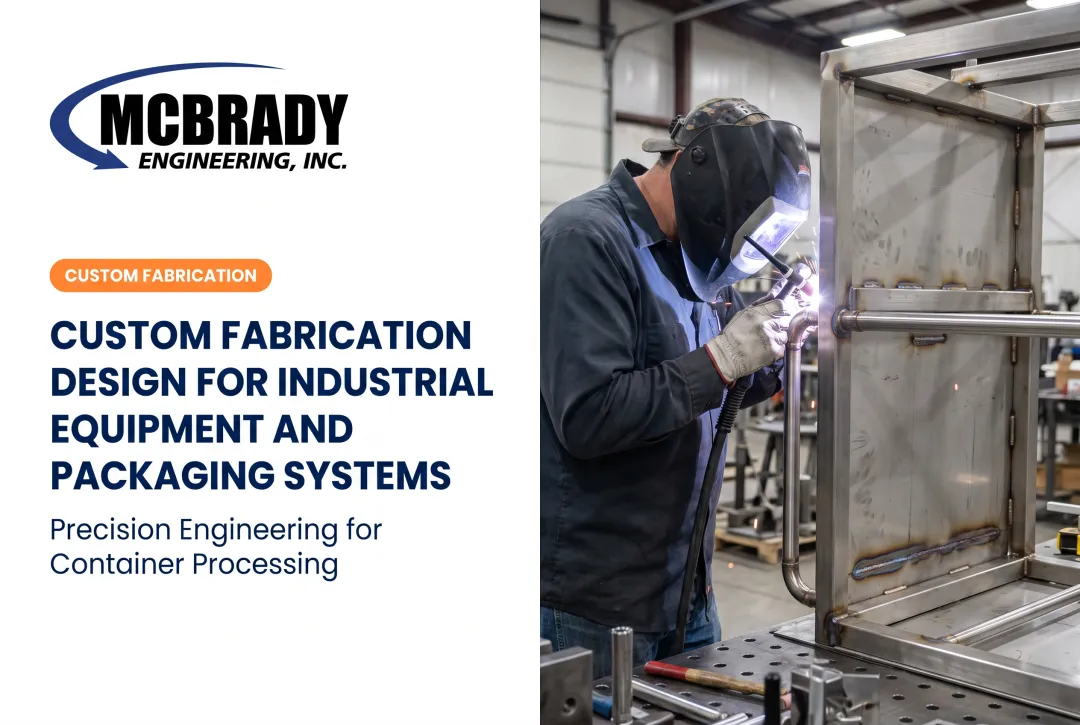
- Cutting, forming, welding, and machining
- Surface finishing
- Frame assembly, guides, and supports
- Drive installation
- Custom transfer or accumulation features the line requires
McBrady Engineering, for example, completes 3D modeling, full-scale assembly drawings, finite element analysis, and 2D drawings before any stainless is cut. The shop works in Type 304 and 316L stainless and mild steel with TIG welding. Every weld is passivated, and pharmaceutical-grade welding is available on request.
Quality Checks Before Shipment
Before a conveyor leaves the shop, it should pass checks for:
- Dimensional accuracy and frame alignment
- Weld integrity and surface finish
- Component fit and belt or chain tracking
- Drive operation and guarding
- Compatibility with the customer's line interfaces
Many buyers also request factory acceptance testing or an equivalent pre-shipment check. Typical FAT scope includes:
- Dry runs and product trials
- Speed verification
- Accumulation or transfer testing
PMMI's One Voice for Acceptance Tests guidance, updated in 2022, notes that unclear acceptance criteria often drive extra travel, material, and schedule costs. Define what "passing" means before fabrication starts so those costs never hit the project.

Documentation to Request
Before accepting delivery, ask for:
- Approved drawings
- Operating and maintenance instructions
- Parts lists
- Test records
- Material documentation and any applicable compliance paperwork
Packaging and Industrial Processing Applications
Conveyor needs shift significantly depending on what's moving through the line.
Food and Beverage Lines
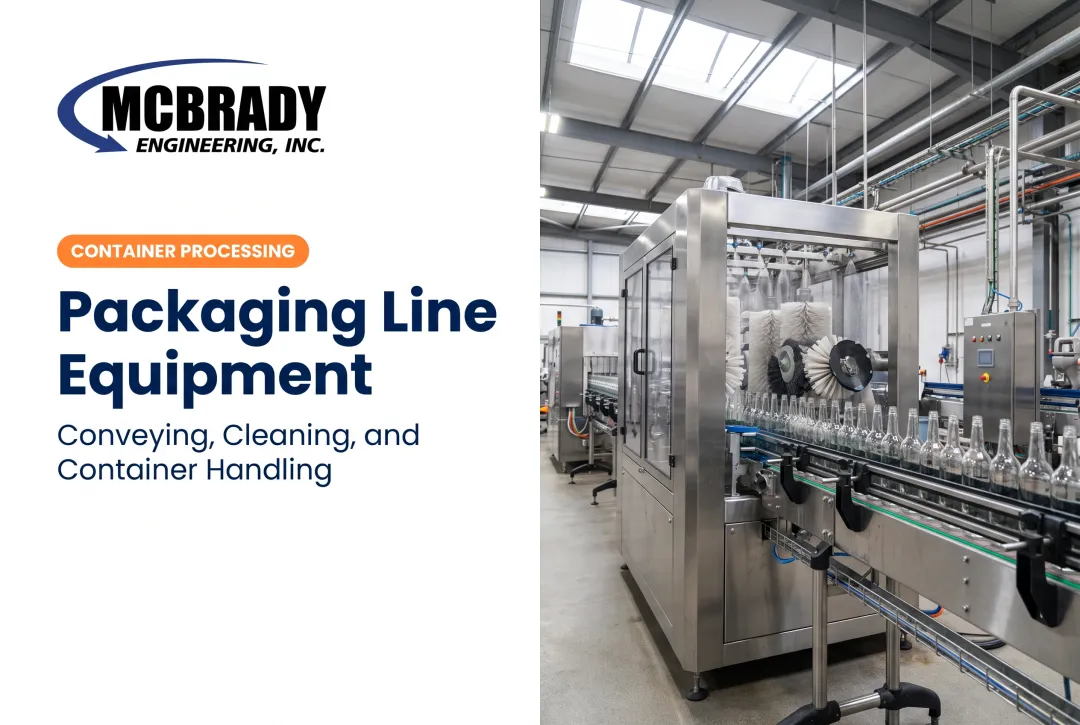
Washdown frequency, sanitary construction, and product-contact risk all shape conveyor design here. Container stability matters too, especially where conveyors integrate with bottle-cleaning or rinsing equipment upstream.
One documented example: a food manufacturer needed packaged containers to merge into a single lane and pass through an existing metal detector. Rather than replace the detector, the company specified a conveyor built to fit the existing aperture, avoiding a costlier equipment swap and a longer startup delay.
Pharmaceutical and Nutraceutical Handling
These lines often involve small containers, precise positioning, and controlled handling. 21 CFR 211.63 and 211.65 require that drug-production equipment be appropriately designed for cleaning and that product-contact surfaces not react with or absorb the product. Verify the specific regulated requirements that apply to your facility rather than assuming blanket compliance from any single material choice.
Chemical, Industrial Fluid, and Contract Packaging Lines
Corrosion resistance, spill control, and durable finishes matter more here than almost anywhere else. Household cleaners, solvents, and industrial fluids can degrade standard stainless surfaces over time, so material selection needs to account for the specific chemistry involved.
Co-packers running multiple bottle shapes and case sizes need conveyors built for repeatable changeovers — adjustable components that adapt across jobs without a line redesign every time a new product arrives. Unit loads and packaged goods also differ meaningfully from bulk, abrasive, hot, or wet process materials, which typically require entirely different conveying surfaces and support structures.

When Custom Conveyor Fabrication Is the Better Choice
Standard equipment works fine until it doesn't. Custom fabrication pays off in situations like these:
- Unusual product dimensions that don't match any catalog model
- Restricted floor space or non-standard elevations
- Complex transfers between machines from different suppliers
- Frequent changeovers across multiple container formats
- Difficult environments (washdown, corrosive residue, extreme temperature)
- Integration with legacy equipment that predates current standards
The Real Cost of Keeping Fabrication In-House
Building conveyors in-house still consumes real resources:
- Engineering time and shop scheduling capacity
- Material sourcing, floor space, and skilled labor
- Design changes, purchasing admin, and ongoing service obligations
Dorner's make-versus-buy analysis notes that those burdens stay with the buyer, while an external partner typically covers manufacturing and warranty support.
A qualified fabrication partner also brings:
- Parallel production capacity outside your shop's queue
- Repeatable construction quality across builds
- Specialized engineering input on transfers, elevations, and materials
- One coordination point when multiple vendors sit on the same line
When Standard Equipment Is Still the Right Call
Not every application needs a custom build. A standard conveyor is usually enough when dimensions are known, interfaces match, conditions are stable, and sanitation or changeover demands are ordinary.
Where McBrady Engineering Fits
When the decision tips toward custom work, it helps to see how catalog experience and fabrication capability combine on a real container line. McBrady Engineering built its name on compact bottle-cleaning machinery, and that same engineering group fabricates custom conveyors and material-handling equipment for container lines.
The 4-Belt Unscrambler is one example:
- Three progressively moving belts separate bottles; a fourth reverse belt recirculates excess containers to prevent jams
- Type 304 stainless steel frame with Delrin tabletop chain-belt conveyors
- Configurable to nearly any length, including an L-shaped dump table for manual loading
- Integrates with a McBrady bottle cleaner or drops into an existing bottling line on its own
For unusual container handling, prototypes, or bottle-cleaner integration challenges, that mix of proven catalog equipment and custom fabrication is a practical path from spec to installed line.

How to Evaluate a Conveyor Fabrication Partner
Not every conveyor supplier operates the same way, and the differences matter once a project is underway.
Look Past the Catalog
Relevant experience in your specific environment (food and beverage, pharmaceutical, chemical, or industrial processing) tells you more than a broad product catalog ever will. Ask how the supplier handles:
- Application discovery and site measurements
- CAD or layout development
- Design approvals before fabrication begins
- Testing procedures and installation coordination
- Post-delivery support
A partner worth hiring should be able to discuss materials, finishes, cleanability, line interfaces, controls, safety, and future expansion in terms specific to your application — not generic marketing language.
Quote-Preparation Checklist
Before requesting a quote, gather:
- Product or container drawings
- Dimensions and weights
- Required speed and hourly throughput
- Conveyor elevations and available layout
- Operating environment, including washdown or chemical exposure
- Available utilities and controls requirements
- Cleaning procedures
- Delivery constraints
Questions Worth Asking Before You Sign
Before you commit, confirm:
- References from similar applications
- Quality procedures and realistic lead times
- Replacement-part support and documentation practices
- Warranty terms
- Division of responsibilities among the fabricator, any integrator, and your plant team
Gaps in those responsibilities cause more delays than almost anything else in a project. A fabricator with deep process experience closes them early.
McBrady Engineering, founded in 1961, builds applications for the food, beverage, and pharmaceutical industries from its 30,000-plus-square-foot facility in Joliet, Illinois. The engineering team handles 3D modeling, finite element analysis, and full assembly drawings.
Fabrication covers Type 304 and 316L stainless steel and mild steel with TIG welding. For a custom conveyor or container-handling project, contact (815) 744-8900 or sales@mcbradyengineering.com.
Frequently Asked Questions
What are the three types of conveyors?
Most lines use three main types: belt, roller, and chain or slat conveyors. Specialized builds such as modular plastic belt and chain systems sit inside these categories rather than outside them.
What is a conveyor in industry?
An industrial conveyor mechanically moves products, containers, materials, or components between process stages. It can operate by gravity or powered drive and typically integrates with automated production and packaging equipment.
When does a packaging line need custom conveyor fabrication?
Custom fabrication makes sense when product dimensions are unusual, floor space is tight, transfers are complex, changeovers are frequent, sanitation rules are strict, or the line must tie into equipment from multiple suppliers.
What information is needed to request a conveyor fabrication quote?
Suppliers need product dimensions and weight, required line speed and throughput, layout and elevations, operating environment, cleaning requirements, control interfaces, and delivery expectations. More detail upfront means a more accurate quote.
How should conveyors be designed for food, beverage, or pharmaceutical applications?
These conveyors need cleanable surfaces, suitable corrosion-resistant materials, and easy access for inspection and drainage. Applicable U.S. standards, such as FDA cleanability requirements under 21 CFR 117.40, should guide material and construction choices for food-contact applications.